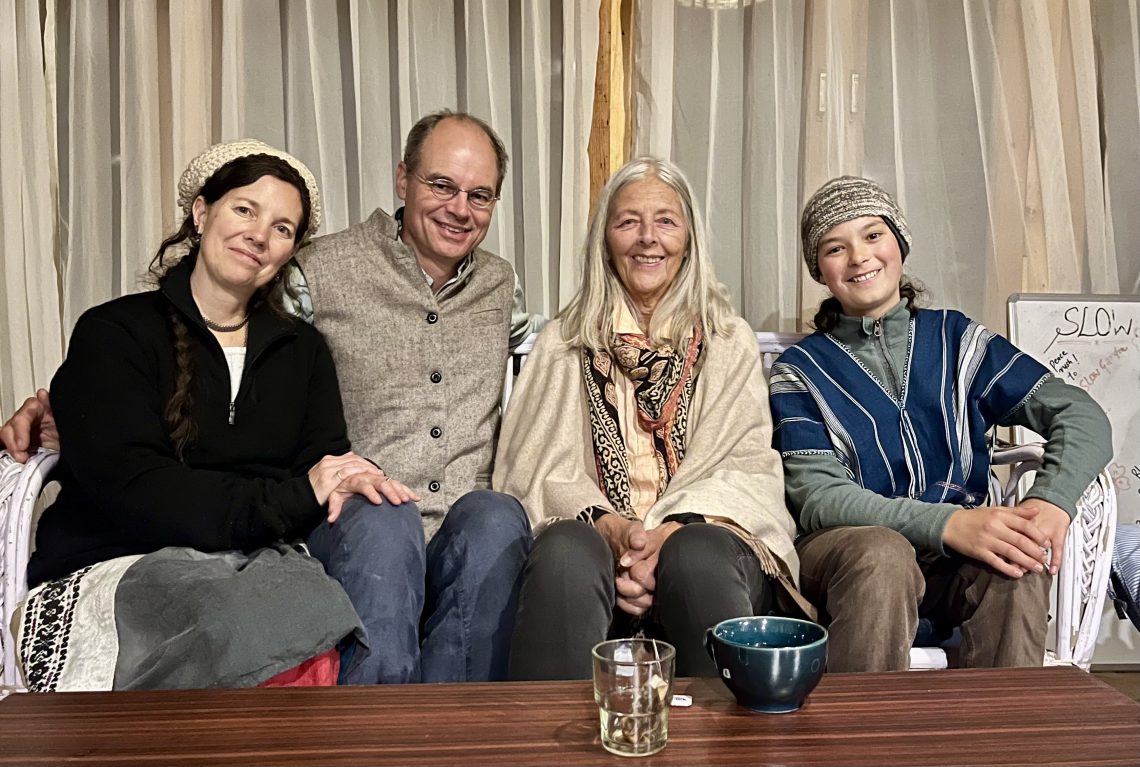
An invitation to be part of the Planet Local Summit, organized by the Local Futures movement, brought us this summer all the way to Ladakh, also known as “Little Tibet”, in the trans-Himalayan plateau of Northern India. The invitation came to us from Helena Norberg-Hodge, founder and president of Local Futures, an international non-profit organization promoting ecological and social well-being by strengthening local economies and communities, advocating for “localization” as an alternative to globalization’s negative impacts, to build a global movement for systemic change, focusing on food, culture and decentralization.
As Helena’s work and writings have been inspiring us for many years now and have been part of our decision to live within a peasant culture, we felt honored and called to travel far and be part of this unique global gathering in Ladakh.
At the summit we connected and shared with the most beautiful souls and spirits, projects and actions, ideas and dreams. We exchanged, learned, inspired and got inspired. Deeply we looked at the global poly crises together with those who make it their life mission to stand up and take positive action. In the midst of the global terror and destruction of nature and culture, we feel much hope and power coming forth from a gathering like this.
Helena Norberg-Hodge started the global localization movement 50 years ago in Ladakh, the trans-Himalayan plateau in the most northern part of India, bordering Tibet. Her renowned book Ancient Futures has become a classic work for many all around the world working on localization. I had the honor to talk with Helena during the summit about the importance of local food systems and the collaboration between ALPA and Local Futures.
Robyn: “There are so many celebrations related to this journey that I would not know really where to begin. But one main one is that everything that was spoken about, basically, is something that we are doing and putting into practice with partnership, communication, agriculture, local economy, local community building resilience. Another enormous piece for me was to feel and sense into the strength of such an ancient human root system that has existed, unbroken (until very recently, but not completely…yet) for so many centuries/millenia. It was so different than where I grew up in the US and where I live now in Transylvania. There has been so much rupture everywhere that I feel in the ground and in my body. And there, the ancientness was still visible in the costumes and customs and also palpable in the people and their connection to place.”
Lars: For me, one of the highlights was a panel which I had the honor to moderate with Bablu Ganguly, Debal Deb and Manas Arvind, my three agroecology warrior friends from India. I find the work that each of them is doing is really amazing. I just give a very short intro to them here, which doesn’t come anywhere close to honor their wide scope of work and impact. I can highly recommend to follow the links in the text and to get to know them better!
Bablu Ganguly (vice-president of IFOAM Organics International) and his wife Mary have founded Timbaktu Collective more than 30 years ago, a project which started on their 10 hectare farm of bare land which they completely regenerated. Now the collective connects over 40.000 rural families, while educating youth, creating jobs for marginalized people, empowering women, conserving biodiversity and promoting organic farming.
Dr. Debal Deb is a farmer, scientist and activist all in one. On his farm Basudha (meaning ‘Mother Earth’ in Sanskrit) he managed to grow and save more than 1440 (!) varieties of rice and make their seeds available for free distribution in his seed bank Vrihi (see this wonderful short documentary). Besides saving the varieties from going extinct, Dr. Deb also started his own laboratory in which he is now analyzing the rice varieties, so he can record, publishing and copyright the properties, all to prevent corporate biopiracy. By doing so the rice varieties can stay in the hands of the millions of indigenous farmers who’s lives depend on them.
Manas Arvind is initiator of the Gurgaon Organic Farmers Market, in the South of New Delhi, India’s capital. Since 2014, this market runs every Sunday without fail, connecting small producers with conscious consumers and is a showcase on how to create resilient local food systems. Manas is also co-founder of Farmversities Alliance, a prime example of how we can re-imagine agricultural education and bring young farmers back to the land.
Robyn: “There are so many celebrations related to this journey that I would not know really where to begin. But one main one is that everything that was spoken about, basically, is something that we are doing and putting into practice with partnership, communication, agriculture, local economy, local community building resilience. Another enormous piece for me was to feel and sense into the strength of such an ancient human root system that has existed, unbroken (until very recently, but not completely…yet) for so many centuries/millenia. It was so different than where I grew up in the US and where I live now in Transylvania. There has been so much rupture everywhere that I feel in the ground and in my body. And there, the ancientness was still visible in the costumes and customs and also palpable in the people and their connection to place.”
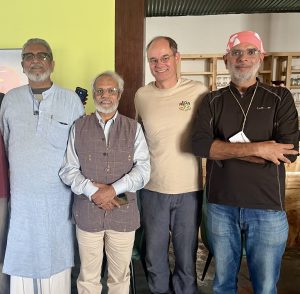 Lars: For me, one of the highlights was a panel which I had the honor to moderate with Bablu Ganguly, Debal Deb and Manas Arvind, my three agroecology warrior friends from India. I find the work that each of them is doing is really amazing. I just give a very short intro to them here, which doesn’t come anywhere close to honor their wide scope of work and impact.
Bablu Ganguly (vice-president of IFOAM Organics International) and his wife Mary have founded Timbaktu Collective more than 30 years ago, a project which started on their 10 hectare farm of bare land which they completely regenerated. Now the collective connects over 40.000 rural families, while educating youth, creating jobs for marginalized people, empowering women, conserving biodiversity and promoting organic farming.
Dr. Debal Deb is a farmer, scientist and activist all in one. On his farm Basudha (meaning ‘Mother Earth’ in Sanskrit) he managed to grow and save more than 1440 (!) varieties of rice and make their seeds available for free distribution in his seed bank Vrihi (see this wonderful short documentary). Besides saving the varieties from going extinct, Dr. Deb also started his own laboratory in which he is now analyzing the rice varieties, so he can record, publishing and copyright the properties, all to prevent corporate biopiracy. By doing so the rice varieties can stay in the hands of the millions of indigenous farmers who’s lives depend on them.
Manas Arvind is initiator of the Gurgaon Organic Farmers Market, in the South of New Delhi, India’s capital. Since 2014, this market runs every Sunday without fail, connecting small producers with conscious consumers and is a showcase on how to create resilient local food systems. Manas is also co-founder of Farmversities Alliance, a prime example of how we can re-imagine agricultural education and bring young farmers back to the land.


Write a comment: